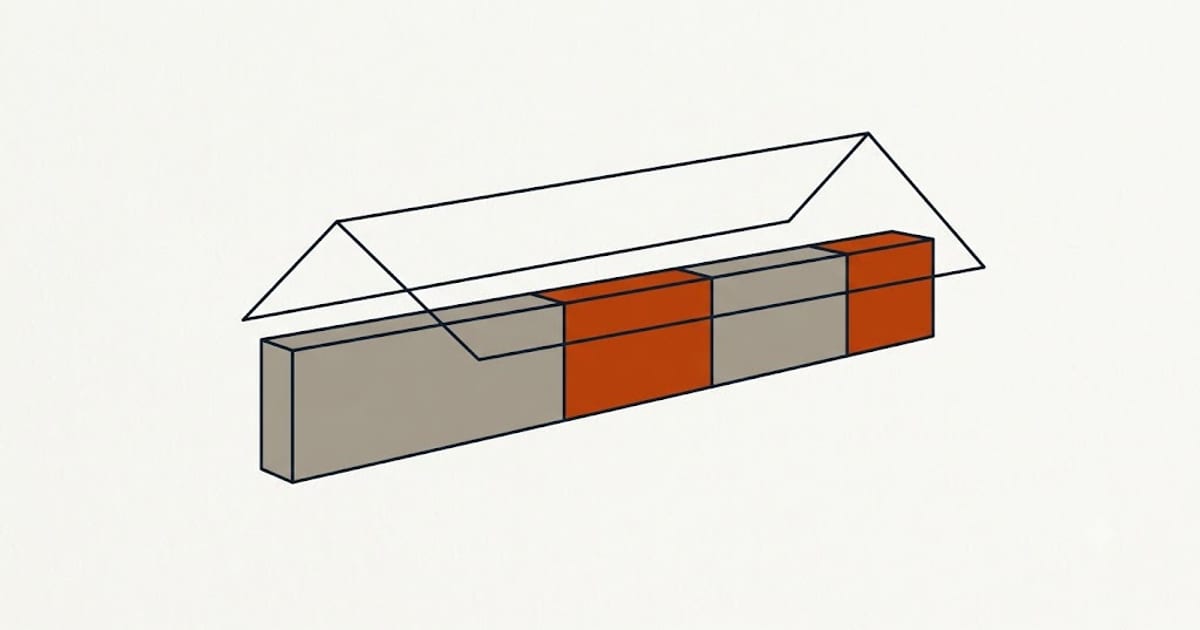
A roof replacement with architectural asphalt shingles costs $380 to $900 per square installed, and about $560 is typical. A square is 100 ft² of roof surface, so the same price is $3.80 to $9.00 per square foot of roof. Three-tab shingles run $300–$500 per square, designer shingles $650–$1,600.
Below: how to turn any quote into a price per square, what that price should cover, why two bids for the same house can disagree, and how per-square pricing relates to the "per square foot" figures in other guides.
Installed prices for 2026, not a quote. Sources are listed at the end.
Price per square by material
| Roof covering | Per square installed | Per ft² of roof |
|---|---|---|
| Three-tab asphalt | $300–$500 | $3.00–$5.00 |
| Architectural asphalt | $380–$900 | $3.80–$9.00 |
| Designer asphalt | $650–$1,600 | $6.50–$16.00 |
| Standing-seam steel | $800–$1,000 | $8.00–$10.00 |
On the 23.2-square ranch house used across this site (60 × 30 ft, 6/12 pitch, 18-inch overhang), architectural shingles come to $8,816–$20,880, with $12,992 typical.
Material grades and their cost per year of service are compared in asphalt shingle roof replacement cost, and metal in metal roof vs shingles cost.
Turning a quote into a price per square
Divide the quote total by the number of squares the contractor measured:
Price per square = quote total ÷ squares
A quote that gives only a total cannot be checked. Ask for the square count and the pitch it was measured at. Most contractors put both on the estimate; a contractor who will not give them has either not measured the roof or does not want the quote compared.
Two quotes for the same house:
| Total | Squares measured | Price per square | |
|---|---|---|---|
| Quote A | $13,900 | 24 | $579 |
| Quote B | $12,600 | 21 | $600 |
Quote B looks $1,300 cheaper, but it charges more per square and measured 3 fewer squares. If the roof really is 24 squares, Quote B at its own rate comes to $14,400, and the difference shows up later as a change order. Settle the measurement before comparing prices; how many squares is my roof shows how to check it.
What the price per square should include
A per-square figure in the $380–$900 range normally covers:
- Tear-off of one existing layer and disposal
- Underlayment, starter strip, drip edge and ridge cap
- The shingles and nails
- Labor
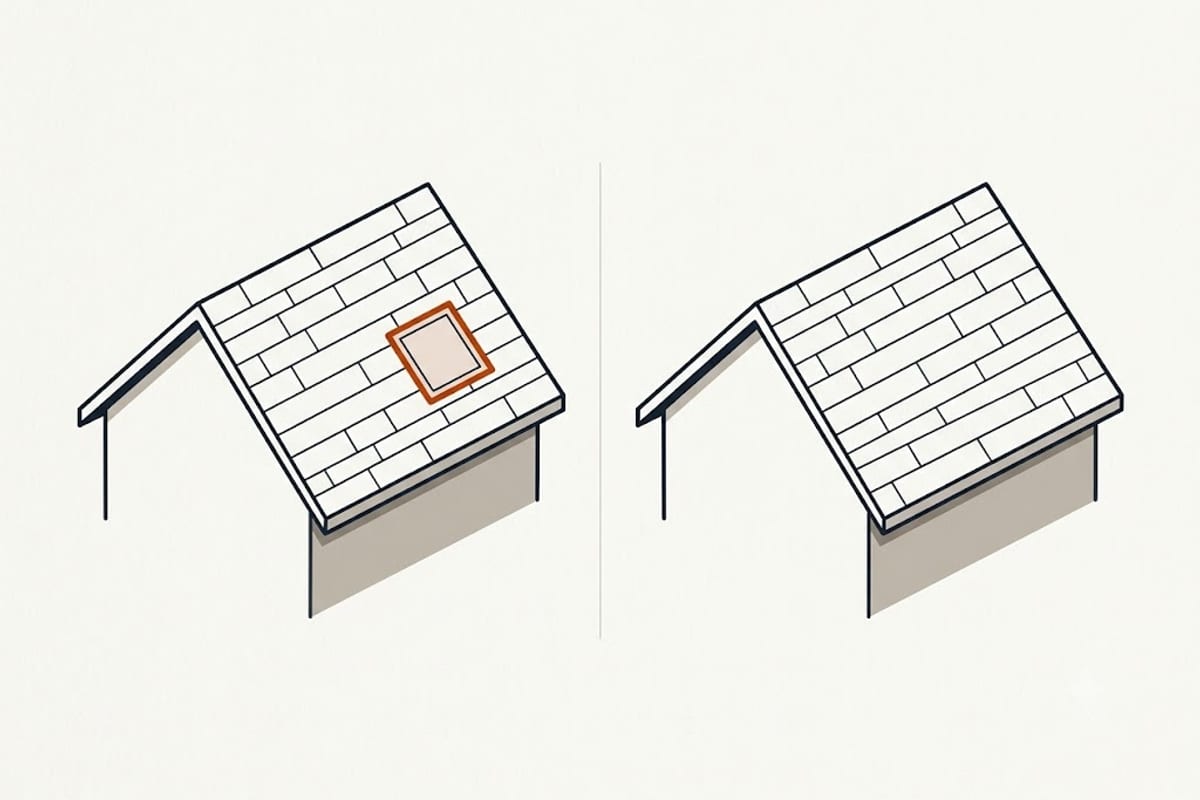
It normally does not cover rotten decking, a second layer of old shingles, rebuilt flashing at chimneys or skylights, or the permit. Those are added separately, and a low price per square often means one of them has been left out rather than priced lower.
| Line added outside the per-square price | Typical price |
|---|---|
| Second layer of old shingles | $50–$150 per square |
| Rotten decking | $75–$150 per 4 × 8 sheet |
Decking contract wording is covered in roof decking replacement cost.
Labor is half or more of the price per square
Labor accounts for 50–60% of an asphalt roof's installed price. At the typical $560 per square, that is $280–$336 of labor in every square. The rest pays for materials, disposal, equipment and overhead.
That split explains which choices move the price:
- Cheaper shingles change only the material part, so switching products saves less than expected.
- Pitch, stories and roof shape change the labor part, which is the larger share.
- Location changes labor through local wages; roofer pay varies by state, while shingle prices vary much less. State figures are in roof replacement cost by state.
How pitch and access raise the labor share is worked through in labor cost to install shingles.
Where in the range a roof lands
The low end, near $380 per square, fits a single-story house with a walkable pitch, one layer to remove, a simple gable shape and easy access for a dumpster.
The high end, toward $900, fits steep pitches that need roof jacks or harnesses, two or three stories, hips and valleys, several chimneys or skylights, and tight access.
Pitch is measurable before any quote arrives: how to measure roof pitch.
Per square foot of roof vs per square foot of house
Guides that quote a price "per square foot" usually mean square feet of roof. NerdWallet, citing Angi, gives $4–$11 per square foot of roof for typical materials.
Per square foot of floor is a different number, because a roof is larger than the floor under it once overhang and pitch are added. For the 1,800 ft² ranch above:
- Roof area: 23.2 squares, or 2,320 ft²
- Typical price: $12,992
- Per ft² of roof: $5.60
- Per ft² of floor: $7.22
A two-story house of the same floor area has about half the roof, so its price per ft² of floor is lower. Roof replacement cost by house size converts floor area to squares for common sizes.
The short version
- Architectural asphalt: $380–$900 per square, about $560 typical, $3.80–$9.00 per ft² of roof.
- Price per square = quote total ÷ squares measured. Get the square count on every quote.
- If two quotes measured different square counts, resolve that first.
- The per-square price covers one tear-off, underlayment, accessories, shingles and labor; decking, extra layers, flashing rebuilds and permits come on top.
- Labor is 50–60% of the price, so pitch and access move it more than shingle choice.
Where these numbers come from
- Architectural $380–$900 per square, $560 typical: the price basis used across this site, from published 2026 installed pricing for asphalt roofs of $3.50–$10.00 per ft² of roof. Method and sources in roof replacement cost.
- Three-tab and designer ranges, the 50–60% labor share, and the $50–$150 second-layer tear-off: Fixr, asphalt shingle roof cost, updated January 21, 2026.
- Standing-seam steel $8–$10 per ft²: SquareDash, metal roof cost, updated April 9, 2026.
- Decking $75–$150 per sheet: SquareDash, roof repair cost, updated April 9, 2026.
- $4–$11 per ft² of roof: NerdWallet, citing Angi, updated September 16, 2025.
- Example quotes: illustrative figures to show the arithmetic.