Labor makes up 50–60% of the installed price of an asphalt shingle roof. On a typical architectural shingle job at $560 per square, that is $280–$336 of labor per square, or $6,496–$7,795 on a 23.2-square roof. Steep pitches, second stories and high-wage states push it higher; removing extra layers adds $50–$150 per square.
Below: how labor is priced, how pitch and stories change it, how state wages move it, what hourly rates actually pay for, and how to read labor on a quote.
Installed prices for 2026, not a quote. Sources are listed at the end.
Labor per square at each price level
| Installed price per square | Labor at 50% | Labor at 60% |
|---|---|---|
| $380 (low end) | $190 | $228 |
| $560 (typical) | $280 | $336 |
| $900 (high end) | $450 | $540 |
Fixr puts roofing labor for asphalt shingles at $1.50–$9.60 per square foot, which is $150–$960 per square. The width of that range comes from the same factors that move a roof from the low end to the high end of the installed price.
For the full installed price and what it includes, see roof replacement cost per square.
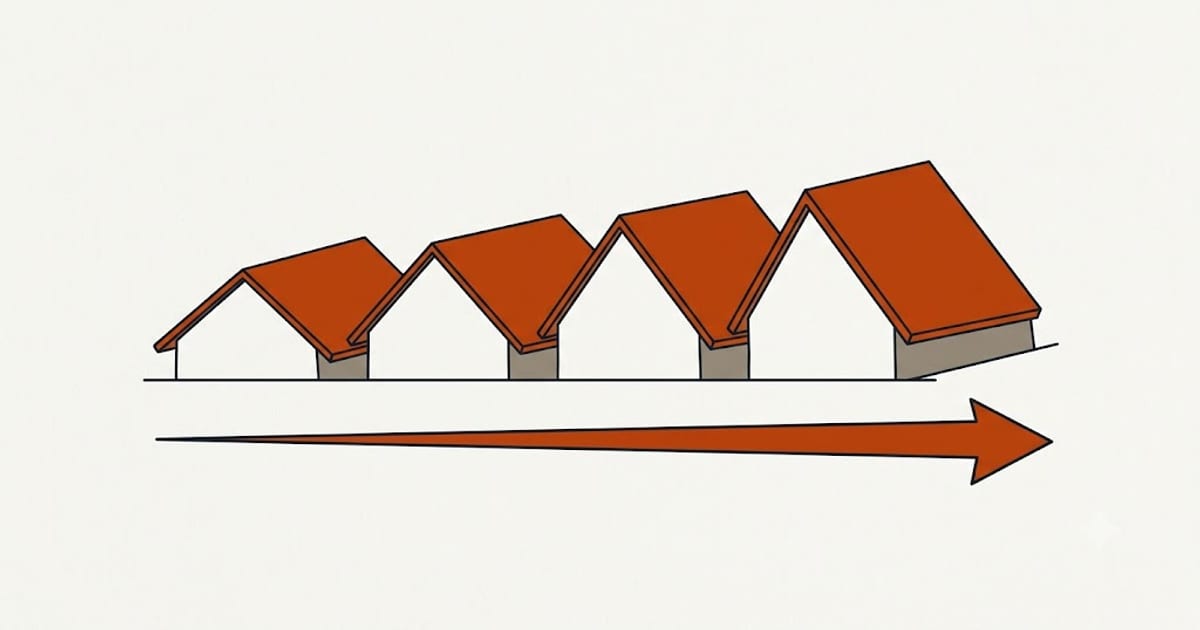
Pitch changes labor more than anything else
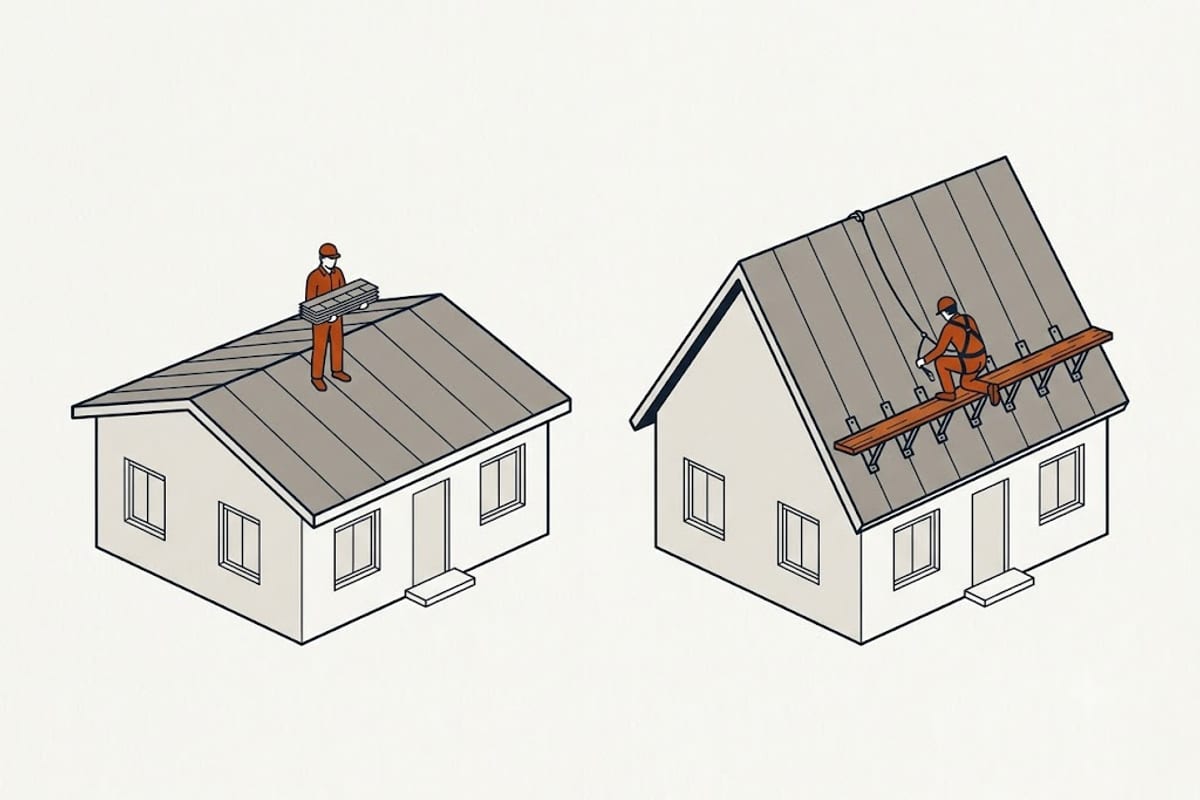
A crew walks a roof at normal speed up to about 6/12. Steeper than that, footing gets harder, and from about 8/12 roof jacks, planks and harnesses are required. Every bundle is carried and every course is set more slowly.
Typical labor multipliers used by contractors:
| Pitch | Labor multiplier | Labor per square at $336 base | 23.2-square roof |
|---|---|---|---|
| 3/12–6/12 | 1.0 | $336 | $7,795 |
| 7/12–8/12 | 1.15–1.25 | $386–$420 | $8,964–$9,744 |
| 9/12–10/12 | 1.3–1.5 | $437–$504 | $10,134–$11,693 |
| 12/12 and steeper | 1.6–2.0 | $538–$672 | $12,472–$15,590 |
Pitch is fixed by the house and can be measured from the attic or the ground: how to measure roof pitch. Knowing it before quotes arrive explains most of the gap between a quote and a national average.
Other things that raise labor
- Stories. A second story means longer ladders, material lifted higher, and debris carried further. Contractors commonly add 10–20% to labor.
- Roof shape. Hips, valleys, dormers, chimneys and skylights all need cutting and flashing. A roof with many of them takes much longer than a plain gable with the same number of squares.
- Access. A dumpster that cannot sit near the roof edge, landscaping that must be protected, or a narrow side yard adds hours.
- Layers to remove. Tear-off of each layer beyond the first costs $50–$150 per square. On 23.2 squares, one extra layer adds $1,160–$3,480. Whether to remove old layers is covered in tear-off vs roofing over.
State wages move labor, not shingles
Labor is the part of a roof's price that follows local pay. The Bureau of Labor Statistics mean annual wage for roofers is $58,140 nationally (May 2025), about $27.95 an hour over a 2,080-hour year.
| Location | Roofer mean wage | Hourly equivalent | Labor per square at 60% of $560 |
|---|---|---|---|
| Mississippi | $45,280 | $21.77 | $262 |
| United States | $58,140 | $27.95 | $336 |
| Illinois | $77,650 | $37.33 | $449 |
Labor per square in each state scales with the wage ratio; materials do not. Every state is calculated in roof replacement cost by state.
What an hourly rate pays for
NerdWallet, citing Angi, reports roofers charging $40–$90 per hour per worker. That is well above the $27.95 mean wage because the hourly charge also covers workers' compensation and liability insurance, payroll taxes, trucks, equipment, disposal logistics, estimating time and profit.
Full roof replacements are normally priced by the square, not by the hour. Hourly billing on a whole roof moves weather and schedule risk onto the homeowner. Hourly or per-unit rates do make sense for work that cannot be measured in advance:
- Replacing rotten decking, usually quoted per sheet (roof decking replacement cost)
- Small repairs and leak tracing (roof repair cost)
Reading labor on a quote
Most re-roof quotes do not list labor separately. To estimate it:
- Divide the total by the squares measured to get the price per square.
- Take 50–60% of that figure as the labor part.
- Compare the result with the pitch and stories of the house: a steep two-story roof should sit well above the $280–$336 typical labor per square.
Ask how many people will be on the roof and how many days the job should take. A crew that can tear off and dry in the same day leaves the roof exposed for hours; a smaller crew spreading the same work over several days leaves it under tarps overnight, which is a weather risk even if the labor price is similar.
Removing the old roof yourself
Tear-off is the part of the job a homeowner can do without a license, and it saves the $50–$150 per square that a second layer would cost, or part of the first-layer tear-off built into the base price. It is heavy, dirty work, and the roof must be dried in the same day. Many contractors will not warranty new shingles over a deck they did not strip and inspect, so agree on it in writing before starting.
The short version
- Labor is 50–60% of an asphalt roof's installed price: $280–$336 per square on a typical $560 job.
- Pitch multiplies labor: about 1.15–1.25 at 7/12–8/12, up to 1.6–2.0 at 12/12 and steeper.
- Each extra layer of old shingles adds $50–$150 per square.
- State wages move labor: $262 per square in Mississippi against $449 in Illinois at the same $560 base.
- Roofers bill $40–$90 per hour per worker, but full replacements should be priced per square.
Where these numbers come from
- Labor share of 50–60%, $1.50–$9.60 per ft² labor, and $50–$150 per square tear-off: Fixr, asphalt shingle roof cost, updated January 21, 2026.
- $560 per square typical: the price basis used across this site; see roof replacement cost.
- Roofer wages: U.S. Bureau of Labor Statistics, Occupational Employment and Wage Statistics, May 2025, SOC 47-2181. Hourly equivalents divide the annual mean by 2,080 hours.
- $40–$90 per hour per worker: NerdWallet, citing Angi, updated September 16, 2025.
- Pitch multipliers and the 10–20% second-story adjustment: typical US contractor pricing; confirm against local bids.