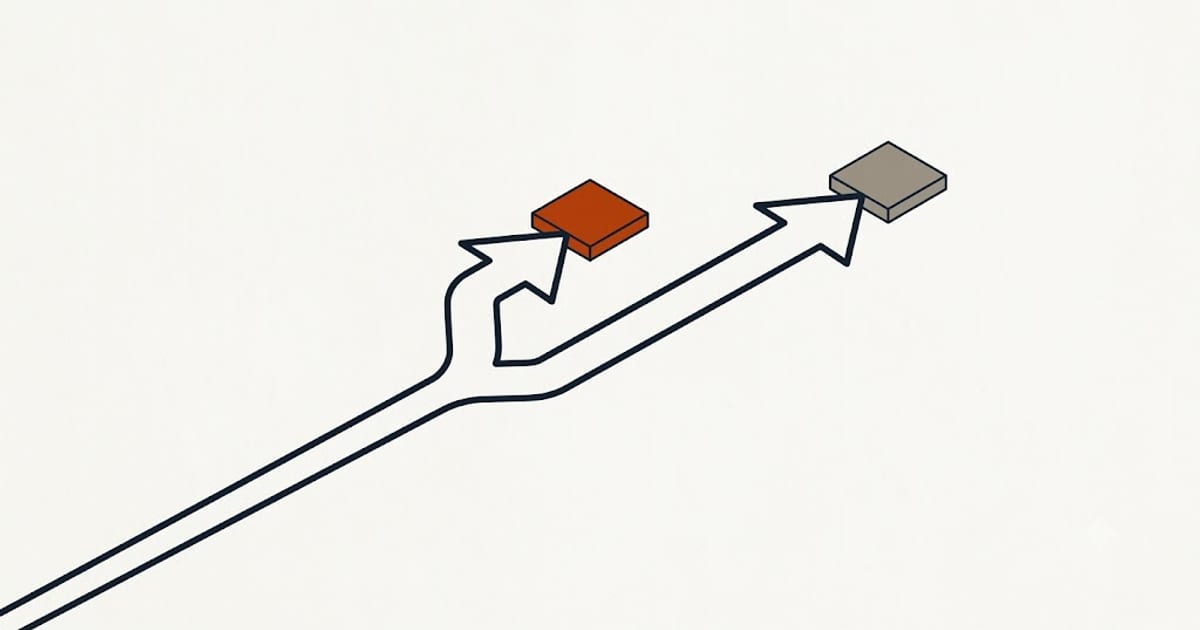
Most roof repairs cost $300 to $1,500, and the average repair is about $900. Replacing a few damaged shingles runs $200–$500, fixing a leak $400–$1,200, and repairs involving sagging or structure $1,500–$5,000 or more. A full replacement of a typical 25-square asphalt roof is about $14,000.
Below: prices by type of repair, what raises a repair quote, how to find where a leak starts, how a shingle is replaced, and four tests that show when a repair is money spent on a roof that needs replacing.
Installed prices for 2026, not a quote. Sources are listed at the end.
Price by type of repair
| Repair | Typical cost |
|---|---|
| Replace a few damaged or blown-off shingles | $200–$500 |
| Replace a cracked plumbing vent boot | $150–$400 |
| Repair flashing at a chimney, wall or skylight | $300–$800 |
| Find and fix a leak | $400–$1,200 |
| Replace rotten decking | $75–$150 per 4 × 8 sheet |
| Sagging or structural repair | $1,500–$5,000+ |
Grouped by size of job:
| Size of repair | Typical cost |
|---|---|
| Minor | $300–$600 |
| Moderate | $600–$1,500 |
| Major | over $3,000 |
A minor repair is a service call plus a small amount of material. Most of the price is the trip, the setup and the first hour, which is why fixing three shingles costs little more than fixing one.
What raises a repair quote
The same repair is priced higher when the crew has to work harder to reach it:
- Pitch. From about 8/12, roof jacks or harnesses are needed. How to measure roof pitch takes a few minutes from the attic or the ground.
- Stories. A second-story repair needs longer ladders and more setup.
- Location on the roof. Valleys, chimneys and skylights involve flashing, which is slower than open shingle field.
- Material. Tile, slate and metal cost more to repair than asphalt, and matching parts may have to be ordered.
- Emergency timing. A same-day call during a storm costs more than a scheduled visit.
A repair quote should name the cause of the problem, the materials to be used, and whether the work carries a warranty. "Patch leak" with a price and nothing else does not say what will be fixed.
Finding where a leak starts
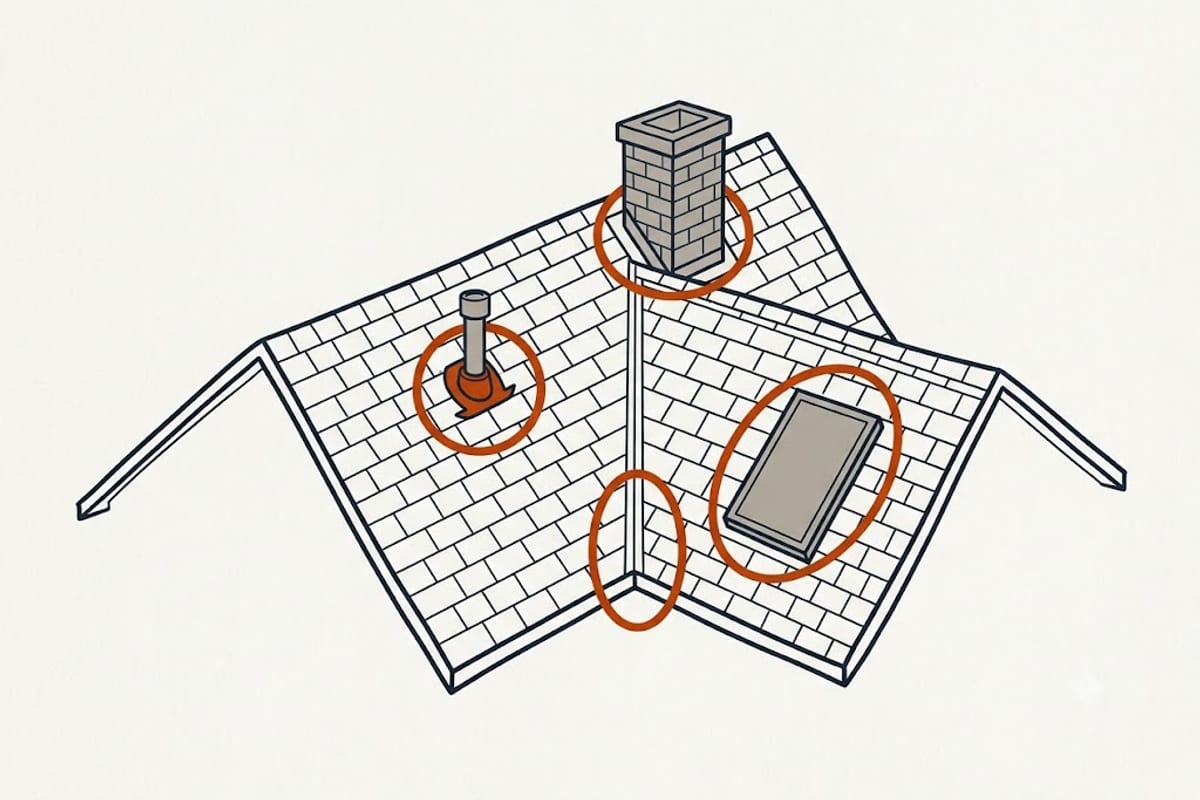
Water travels along the deck and rafters before it drips, so a stain on the ceiling is rarely under the hole. Four places account for most leaks:
- Plumbing vent boots. The rubber collar around a vent pipe cracks long before the shingles wear out. It is one of the cheapest repairs on a roof, at $150–$400.
- Chimney and wall flashing. Metal flashing separates from masonry or siding as sealant ages.
- Valleys. Two roof planes send their water into one line.
- Skylights. The flashing kit around the frame, or the seal of the unit itself.
After the next rain, go into the attic with a flashlight and look for wet wood near each of these points; on a sunny day, look for daylight showing through the deck. A leak found only at one vent boot or one chimney means the rest of the roof is not the problem. Step flashing counts and layout are in step flashing count.
How a damaged shingle is replaced
Replacing a single shingle does not involve tearing anything off:
- Break the adhesive seal of the shingle above the damaged one, working a flat bar under its lower edge.
- Pull the nails holding the damaged shingle, including the nails of the row above that pass through it.
- Slide the new shingle into place under the row above.
- Nail it with 4 nails (6 in high-wind areas), placed just below the edge of the row above so the heads are covered.
- Re-nail the row above where its nails were removed, and seal its lower edge down.
This is manageable on a low-pitch, single-story roof in cool weather, when shingles are less likely to crack. Asphalt shingles scuff easily in heat, and any work above about 8/12 or two stories up needs fall protection.
Repair or replace: four tests
A repair is the right spend only when the roof it is repairing will last. Four tests settle that, and the third overrides the others.
1. Age against expected life. Architectural asphalt shingles typically last 22–30 years, three-tab 15–20. Past about 75% of expected life, a repair buys a year or two on a roof that needs replacing regardless. How long an asphalt roof lasts covers what shortens that life.
2. Extent of damage. The rule of thumb crews use: damage on less than about 30% of one roof plane is a repair. Above that, the patched area is large enough that the undamaged shingles are the same age as the failed ones.
3. Deck condition. A sag along the ridge or between rafters, a soft feel underfoot, or daylight visible from the attic means the problem is under the shingles. A roof with a wet or rotten deck gets replaced, whatever its age, because new shingles would seal the moisture in. Roof decking replacement cost covers what that adds.
4. Layer count. A roof that already has two layers of shingles is a full tear-off next time, and any repair is nailed through both layers into a deck nobody can see. See tear-off vs roofing over.
The cost per year shows when repair is wrong
Compare a repair against a replacement by dividing each by the years it buys:
| Choice | Cost | Years of service | Cost per year |
|---|---|---|---|
| $900 repair, roof with 4 years left | $900 | 4 | $225 |
| Same repair needed again each year for 3 years | $2,700 | 3 | $900 |
| Replacement, 25 squares architectural | $14,000 | 25 | $560 |
A single repair on a roof with life left wins easily. Repeated repairs on the same roof pass the cost of replacement within a few years, and each winter of leaking adds damage to the deck and ceilings that the table does not count.
The replacement side of that comparison, including what moves $14,000 up or down for a specific house, is in roof replacement cost. Shingle grades and their prices are in asphalt shingle roof replacement cost.
The short version
- Most repairs: $300–$1,500; about $900 on average.
- Cheapest common fix: a cracked vent boot, $150–$400. Check the vents and chimney before assuming the roof is failing.
- A soft or sagging deck means replacement, regardless of age.
- Past about 75% of the roof's expected life, or with damage on more than about 30% of a plane, price a replacement.
- Divide each option by the years it buys; repeated repairs usually lose.
Where these numbers come from
- Repair prices by type and size of job, the $900 average and the decking rate: SquareDash, roof repair cost, updated April 9, 2026.
- Replacement at $560 per square, $14,000 for 25 squares: the price basis used across this site; see roof replacement cost for its sources.
- Service life, the 75% and 30% thresholds, and nails per shingle: typical US roofing practice and manufacturer installation instructions; check the instructions printed on the shingle wrapper for the product on the roof.