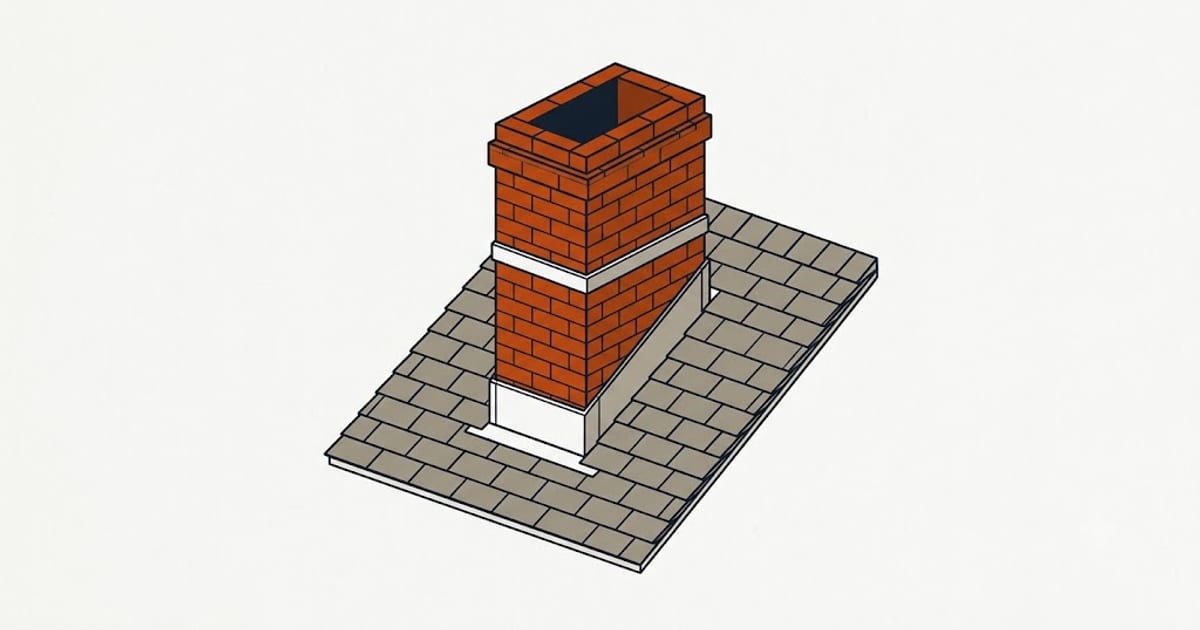
Replacing roof flashing costs $300 to $800 at a single chimney, wall or skylight, and resealing flashing that is still sound costs about $200 to $300. Chimney jobs have the widest range: a leak there can cost $200 or, when the masonry above the roof needs work too, as much as $3,500.
Below: prices by location, the difference between resealing and replacing, why chimney quotes vary so much, and when flashing should be replaced together with the roof.
Installed prices, not a quote. Sources are listed at the end.
Price by location
| Where the flashing is | Typical cost |
|---|---|
| Reseal or patch existing flashing | $200–$300 |
| Replace damaged flashing, one location | $300–$800 |
| Plumbing vent boot | $150–$400 |
| Skylight leak | $300–$800 |
| Valley leak | $300–$1,500 |
| Chimney leak, including flashing | $200–$3,500 |
Flashing is priced per location because the work is at one spot: the shingles around it are lifted or removed, old metal comes out, new metal goes in, and the shingles go back. Most of the price is labor, and a steep pitch or second story raises it the same way it raises any roof repair.
Reseal or replace
Resealing means cleaning out old caulk and applying new sealant where the flashing meets the brick, siding or skylight frame. It is a fair repair when the metal is intact and only the sealant has cracked.
Replacing is needed when the metal itself has failed: rusted through, bent, lifted by wind, or pulled out of the mortar joint it was set into. Caulk over failed metal stops a leak for a season or two, and a quote that lists "seal flashing" every year on the same chimney is paying repeatedly for a repair that is not holding.
A repair quote should say which of the two it is. "Flashing repair" without a description does not distinguish a tube of sealant from new metal.
Why chimney flashing costs more
A chimney has flashing on four sides and two layers on most of them:
- Base and step flashing lies on the roof deck under the shingles and turns up against the brick.
- Counter flashing is set into a mortar joint in the brick and folds down over the top of the first layer, so water running down the chimney is carried out over the shingles.
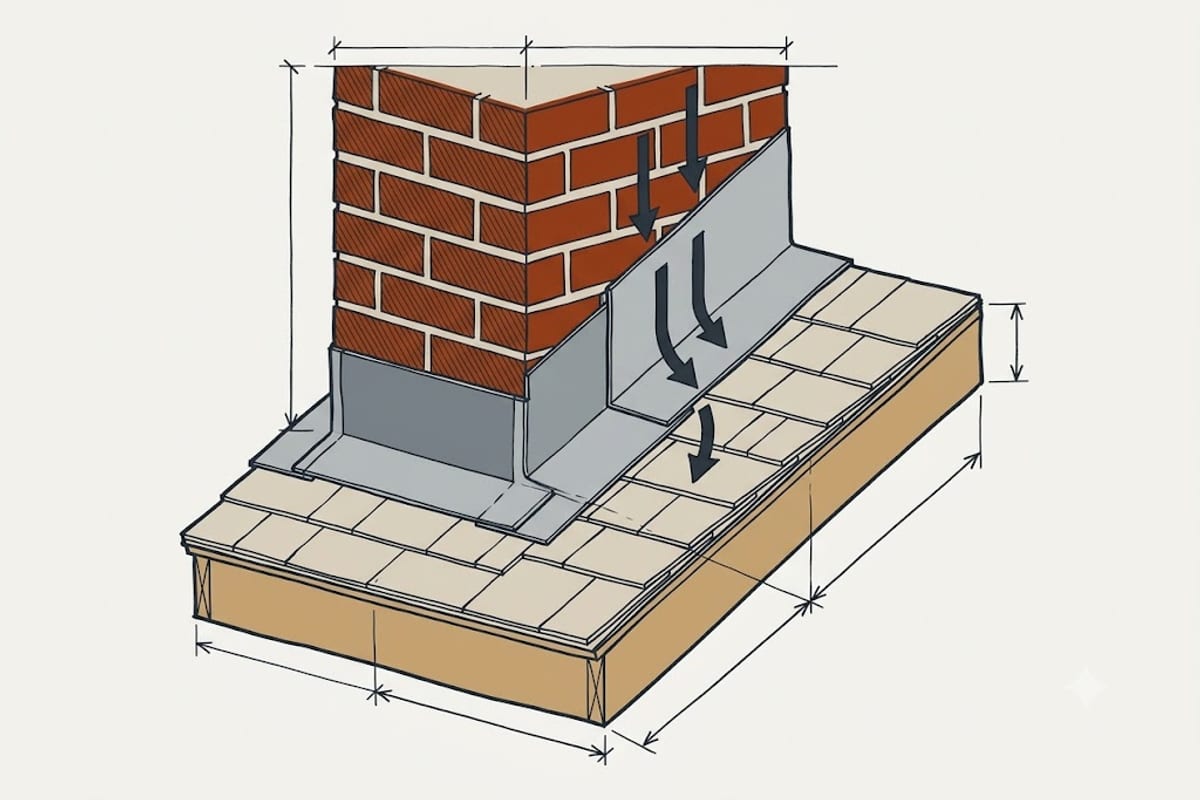
Replacing counter flashing means cutting out mortar and repointing the joint, which is masonry work. Old brick often needs more repointing than the flashing alone, and a crumbling chimney crown lets water in from the top regardless of the flashing. Those items are what push a chimney quote from a few hundred dollars toward the top of the range.
Wide chimneys also need a cricket: a small peaked section built on the uphill side so water flows around the chimney instead of pooling against it. The International Residential Code (section R903.2.2) requires one on the upslope side of a chimney more than 30 inches wide.
Step flashing along walls
Where a roof meets a wall of the house, such as a second-story wall above a porch roof, step flashing is woven in with the shingles, one piece per course. Siding covers its upturned edge. Replacing it means removing the lower course of siding along that wall as well as the shingles.
Step flashing count shows how many pieces a wall of a given length and roof pitch needs, which is useful for checking a quote for a new roof.
Flashing and a new roof
Step flashing and vent boots are normally replaced as part of a roof replacement, because the old pieces are bent when the old shingles come off. Counter flashing in good condition can often stay in place.
The base price of a roof replacement on this site includes drip edge but not rebuilt flashing at chimneys and skylights; roof replacement cost lists what it leaves out. When a re-roof is planned within a few years, a failing flashing is usually worth a reseal now and replacement with the roof, rather than full replacement twice.
Finding which flashing leaks
Water that enters at flashing often runs along the rafters before it drips, so the wet spot on the ceiling can be feet away. Checking the attic under each chimney, skylight, wall joint and vent after rain narrows it down before anyone is paid to look. Cost to fix a roof leak covers the other common sources and what each costs.
The short version
- Reseal sound flashing: $200–$300. Replace flashing at one location: $300–$800.
- Vent boots: $150–$400. Valleys: $300–$1,500.
- Chimneys range from $200 to $3,500 because masonry repairs are often part of the job.
- Repeated caulking of the same flashing means the metal needs replacing.
- With a new roof planned, reseal now and replace flashing with the roof.
Where these numbers come from
- Replacing flashing at $300–$800 and vent boots at $150–$400: SquareDash, roof repair cost, updated April 9, 2026.
- Skylight, valley and chimney leak ranges: Fixr, roof leak repair cost, updated January 27, 2026.
- Chimney flashing repair at $200–$300 and replacement at $300–$800: Fixr, chimney repair cost, updated January 31, 2025.
- Cricket requirement: a cricket or saddle on the ridge side of any chimney or penetration more than 30 inches wide, measured perpendicular to the slope. Wording checked in the 2021 International Building Code as adopted by Illinois (UpCodes); the International Residential Code carries the same requirement in section R903.2.2. Local adoption and amendments vary, so confirm with the building department.