Roof Pitch
Pitch, rise and the multiplier that turns footprint into actual roof area.
Roof pitch is written as rise over run — 6/12 means six inches of rise for every twelve inches of horizontal run. It is not a percentage and it is not an angle, and all three get quoted interchangeably by people who mean different things.
6/12 is 26.6°, and 50%. Not 6% and not 6°.
The pitch factor is the number worth keeping
factor = √(1 + (rise ÷ 12)²)
4/12 gives 1.054. 6/12 gives 1.118. 8/12 gives 1.202. 12/12 gives 1.414.
Multiply any footprint by it to get roof area. That single number is the difference between ordering enough shingle and ordering for the ground.
Rafters are hypotenuses
Which means the rafter is always longer than the half-span, and the gap grows fast with pitch. Cut long and trim on the roof; the reverse does not work.
The ridge height above the wall plate is the half-span multiplied by rise over twelve — the other measurement people need and rarely calculate.
Pitch decides the material, not just the look
Below 2/12, asphalt shingles are not permitted at all. Water moves too slowly and wind drives it back under the courses. That roof needs a low-slope membrane — modified bitumen, TPO or EPDM — which is a different trade with different detailing.
2/12 to 4/12, shingles are allowed but the IRC requires two layers of underlayment (R905.2.7). It is the most commonly skipped requirement on shallow roofs and the one that surfaces as a leak two winters later.
4/12 and above, a single layer is enough.
And it decides the day rate
Above 8/12 most people cannot stand on a roof. Roof jacks, planks or scaffolding change the cost of the job more than any material choice does.
4 articles
7/12 roof pitch over a 36 ft span
| Rafter length18 ft half-span × 1.158 | 20.84ft |
|---|---|
| With a 12″ overhangwhat you actually cut | 22ft |
| Ridge height above the wall | 10.5ft |
| Pitch factor√(1 + (7/12)²) — multiply footprint by this for roof area | 1.158 |
| Angleset the mitre saw to this | 30.3° |
| As a percentage7/12 is 58.3%, not 7% | 58.3% |
| Roof area per 100 ft² of footprint | 116ft² |
| Asphalt shinglesingle layer of underlayment is enough | Standard |
| Walkableproper footwear and a harness | Yes, with care |
Notes
- Three ways of saying pitch, and they are not the same number. 7/12 means 7 inches of rise per 12 inches of run. As an angle that is 30.3°. As a percentage it is 58.3%. People routinely quote one and mean another, and on a roof that mistake is expensive.
- The rafter is the hypotenuse, so it is always longer than the half-span: 18 ft of run becomes 20.84 ft of rafter, plus 1.16 ft for a 12″ overhang. Cut to 22 ft and trim on the roof rather than the other way round.
- At 7/12 a single layer of underlayment satisfies the code, and water sheds fast enough that wind-driven rain is not the concern it is on shallower roofs.
- The pitch factor 1.158 is the number to keep: multiply any footprint by it to get roof area. A 100 ft² footprint is 116 ft² of roof at this pitch.
- 7/12 is walkable with proper footwear and a harness. Wet, mossy or frosted, none of that holds.
Roof pitch and rafter length
325 calculations · browse all
- 1/12 roof pitch over a 12 ft span
- 1/12 roof pitch over a 24 ft span
- 1/12 roof pitch over a 38 ft span
- 1/12 roof pitch over a 52 ft span
- 2/12 roof pitch over a 16 ft span
- 2/12 roof pitch over a 28 ft span
- 2/12 roof pitch over a 42 ft span
- 2/12 roof pitch over a 56 ft span
- 3/12 roof pitch over a 20 ft span
- 3/12 roof pitch over a 32 ft span
- 3/12 roof pitch over a 46 ft span
- 3/12 roof pitch over a 60 ft span
- 4/12 roof pitch over a 24 ft span
- 4/12 roof pitch over a 38 ft span
- 4/12 roof pitch over a 50 ft span
- 5/12 roof pitch over a 14 ft span
- 5/12 roof pitch over a 28 ft span
- 5/12 roof pitch over a 42 ft span
- 5/12 roof pitch over a 54 ft span
- 6/12 roof pitch over a 18 ft span
- 6/12 roof pitch over a 32 ft span
- 6/12 roof pitch over a 46 ft span
- 6/12 roof pitch over a 58 ft span
- 7/12 roof pitch over a 22 ft span
- 7/12 roof pitch over a 36 ft span
- 7/12 roof pitch over a 50 ft span
- 8/12 roof pitch over a 14 ft span
- 8/12 roof pitch over a 26 ft span
- 8/12 roof pitch over a 40 ft span
- 8/12 roof pitch over a 54 ft span
- 9/12 roof pitch over a 18 ft span
- 9/12 roof pitch over a 30 ft span
- 9/12 roof pitch over a 44 ft span
- 9/12 roof pitch over a 58 ft span
- 10/12 roof pitch over a 22 ft span
- 10/12 roof pitch over a 34 ft span
- 10/12 roof pitch over a 48 ft span
- 12/12 roof pitch over a 12 ft span
- 12/12 roof pitch over a 26 ft span
- 12/12 roof pitch over a 40 ft span
- 12/12 roof pitch over a 52 ft span
- 14/12 roof pitch over a 16 ft span
- 14/12 roof pitch over a 30 ft span
- 14/12 roof pitch over a 44 ft span
- 14/12 roof pitch over a 56 ft span
- 16/12 roof pitch over a 20 ft span
- 16/12 roof pitch over a 34 ft span
- 16/12 roof pitch over a 48 ft span
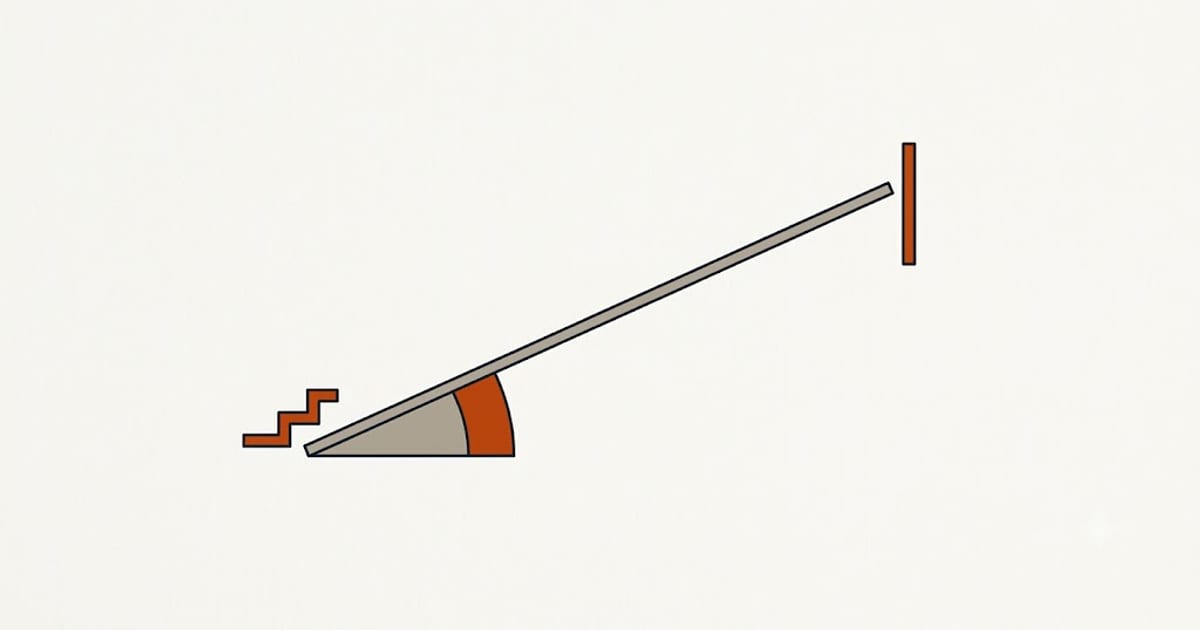 Roof Pitch to Degrees: The Conversion, and Why Three Numbers Get Confused
6/12, 26.6 degrees and 50 percent are the same roof. Quoting one when someone means another is how a rafter gets cut wrong.
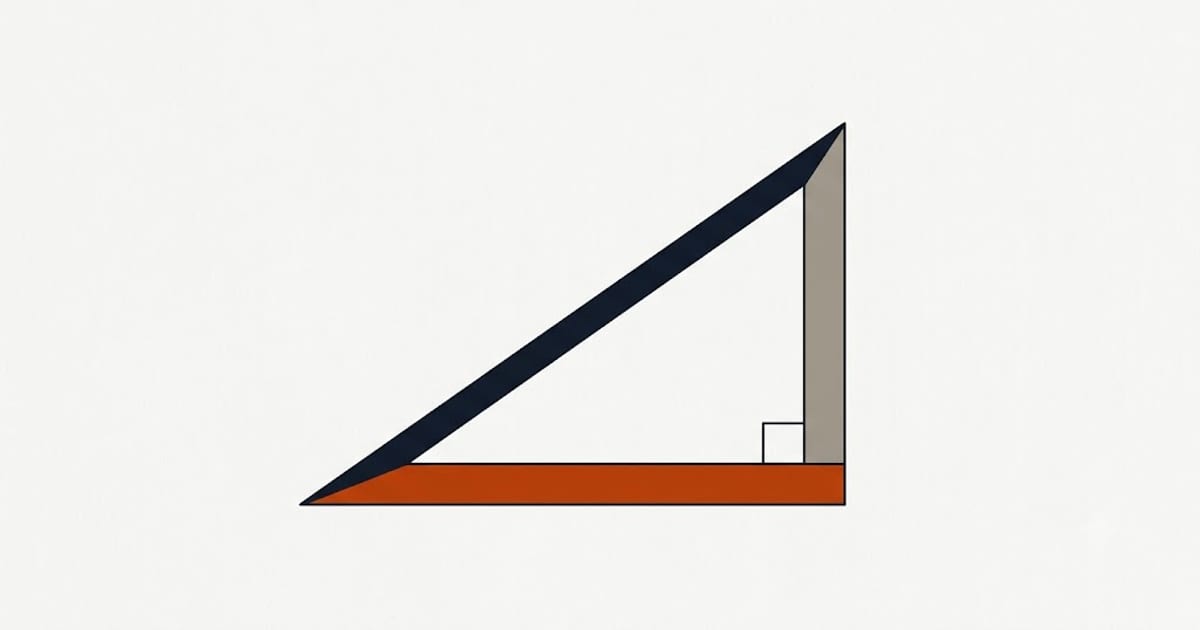 Roof Pitch Multiplier Chart: The One Number That Turns Footprint Into Roof
One multiplication separates the area of the ground from the area of the roof. Skip it and every material order on the job is short.
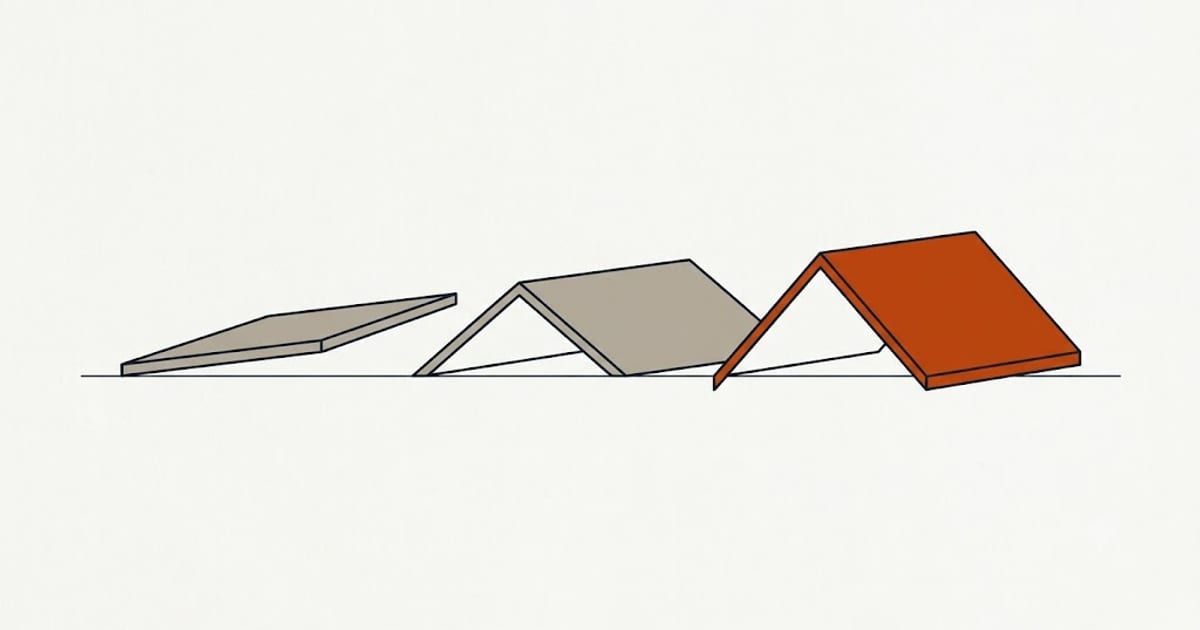 Minimum Roof Pitch for Asphalt Shingles: 2/12, With a Condition Most People Skip
The number everyone remembers is 2/12. The condition attached to it is the one that shows up as a leak two winters later.
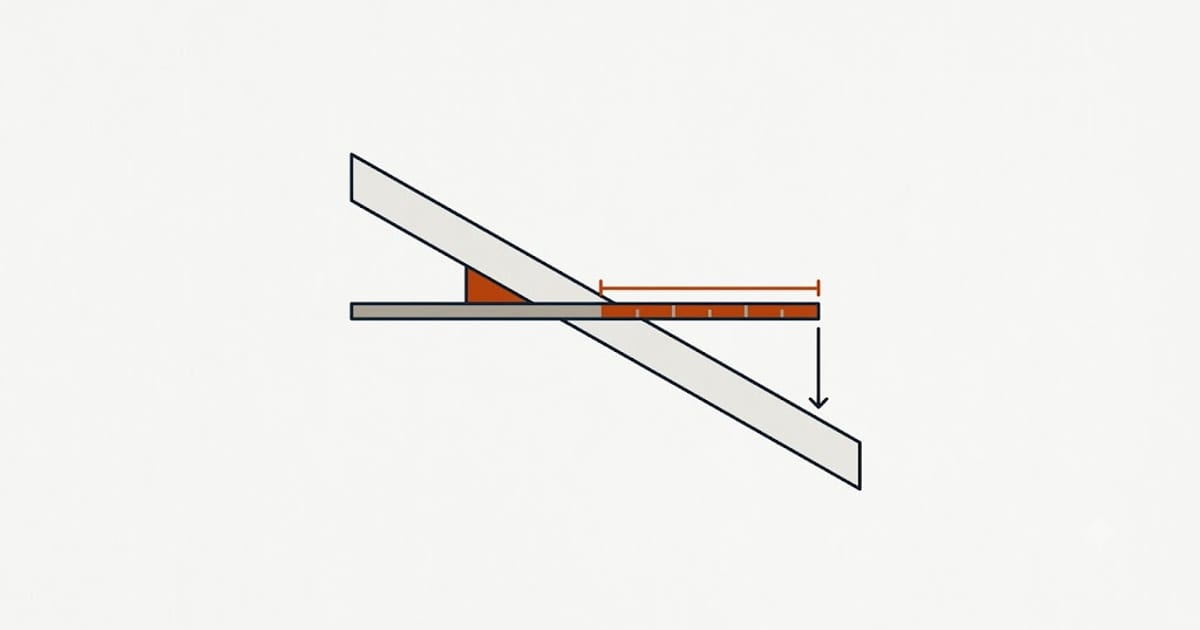 How to Measure Roof Pitch: Three Methods, and Which One to Trust
Pitch is rise over run, always over twelve. It is not a percentage and it is not an angle, and all three get quoted as if they were the same thing.