Attic Ventilation
Net free area, intake against exhaust, and why the balance matters more than the total.
An attic is ventilated to keep the deck cold in winter and to let summer heat out. Both failures show up on the roof rather than in the attic, which is why ventilation lands on a roofing estimate at all.
The two rules
The IRC allows 1 square foot of net free area per 150 square feet of attic floor, and relaxes that to 1 per 300 when either a vapor retarder sits on the warm side of the ceiling, or the ventilation is balanced with 40–50% of it in the upper third of the attic.
Almost every modern roof uses 1/300, because balanced intake and exhaust is what you want regardless of what the code will accept.
Net free area is not hole size
A 16 × 8 in soffit vent has 128 square inches of opening and perhaps 65 square inches of net free area once the insect screen and the louvers take their share. The manufacturer publishes the figure. The hole tells you nothing, and estimating from the hole overstates ventilation by roughly half.
Balance beats total
This is the part that gets inverted. Intake and exhaust should be roughly equal, with intake never less than exhaust.
An attic with plenty of ridge vent and blocked soffits does not get more ventilation from more ridge vent — it pulls its makeup air down through the ceiling from the house, dragging conditioned air and its moisture into the attic. Adding exhaust to a starved attic is actively harmful, and it is the single most common thing done to a roof in the belief that it helps.
Do not mix exhaust types
Ridge vent and powered gable fans on the same attic short-circuit each other: the fan takes its air from the nearest ridge slot rather than from the eaves, and the far end of the attic ventilates less than it did before.
Pick one exhaust path. Ridge vent, with continuous soffit intake, is the one that works without moving parts.
What blocks intake
Insulation. Blown-in insulation pushed to the eaves seals the soffit from the inside, and no amount of vent on the outside undoes it. Baffles at every rafter bay are what keep the channel open, and they cost almost nothing at the time the insulation goes in and a great deal afterward.
What to check before ordering vent
Whether the soffit is vented at all. Solid soffit with decorative slots stamped into a vinyl panel is common and provides near-zero net free area.
5 articles
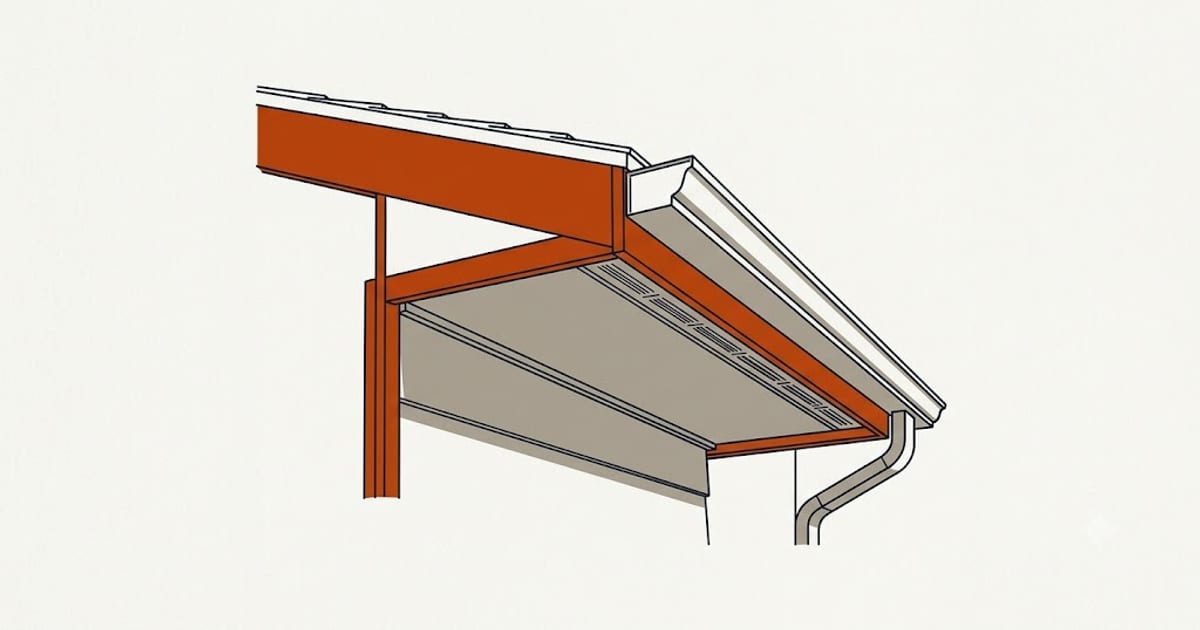 Fascia and Soffit Replacement Cost: $15–$30 per Foot to Replace, $6–$20 to Repair
Most fascia and soffit jobs are a rotten section near a gutter, priced around $900 for 30 feet. Replacing the whole roof edge of a ranch house is closer to $3,000–$6,000.
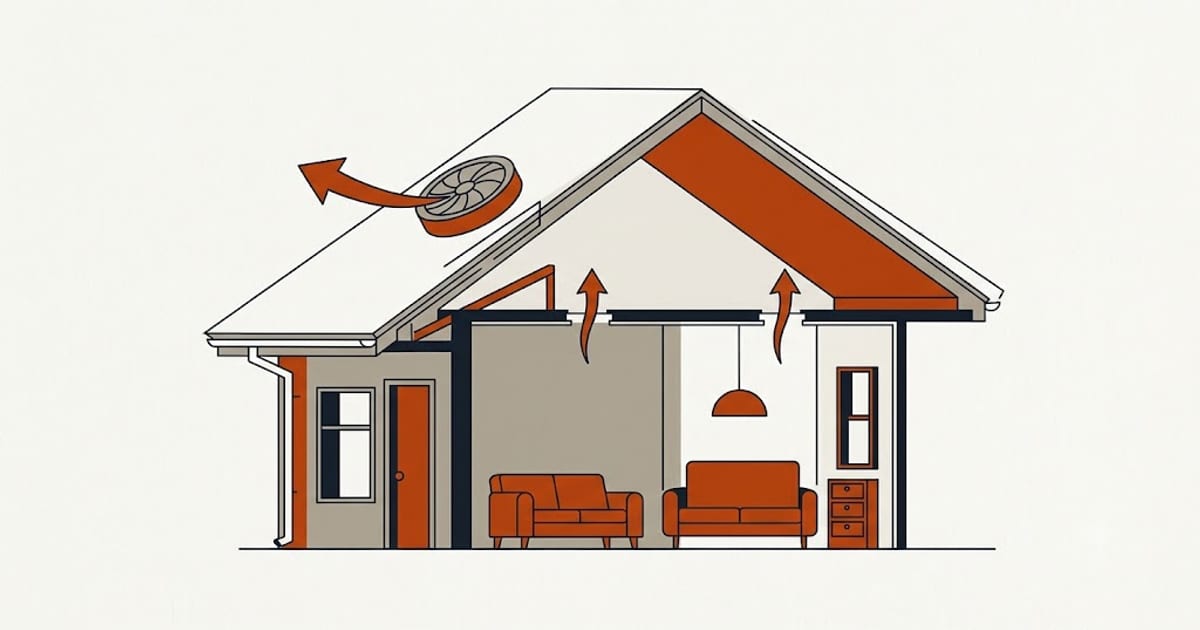 Attic Fan Cost — and the Case for Spending Nothing
A powered attic fan costs $300 to $1,200 installed. On a house with a leaky ceiling it can pull conditioned air out of the living space and cost more to run than it saves.
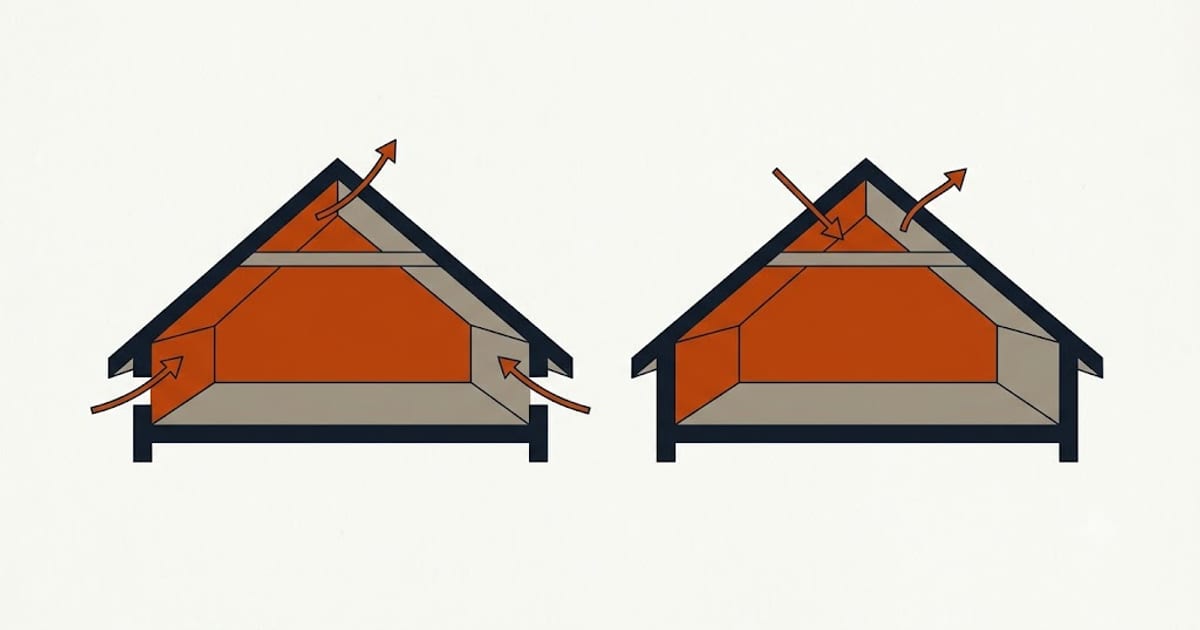 Intake Versus Exhaust: The Balance Rule That Decides Whether Vents Work
Almost every badly ventilated attic has enough exhaust. What it does not have is intake, and adding a second exhaust vent makes the problem worse rather than better.
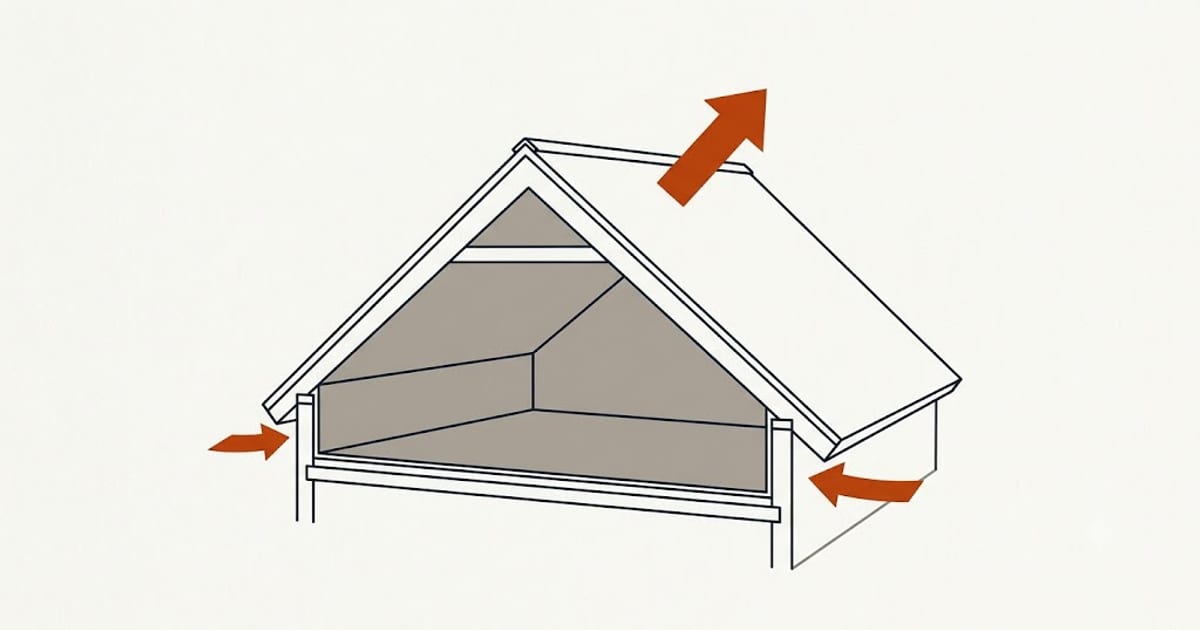 Attic Ventilation: Net Free Area, the 1/300 Rule, and Why Balance Beats Total
Most under-ventilated attics have plenty of vents. What they do not have is intake, and adding more exhaust to that is actively harmful.
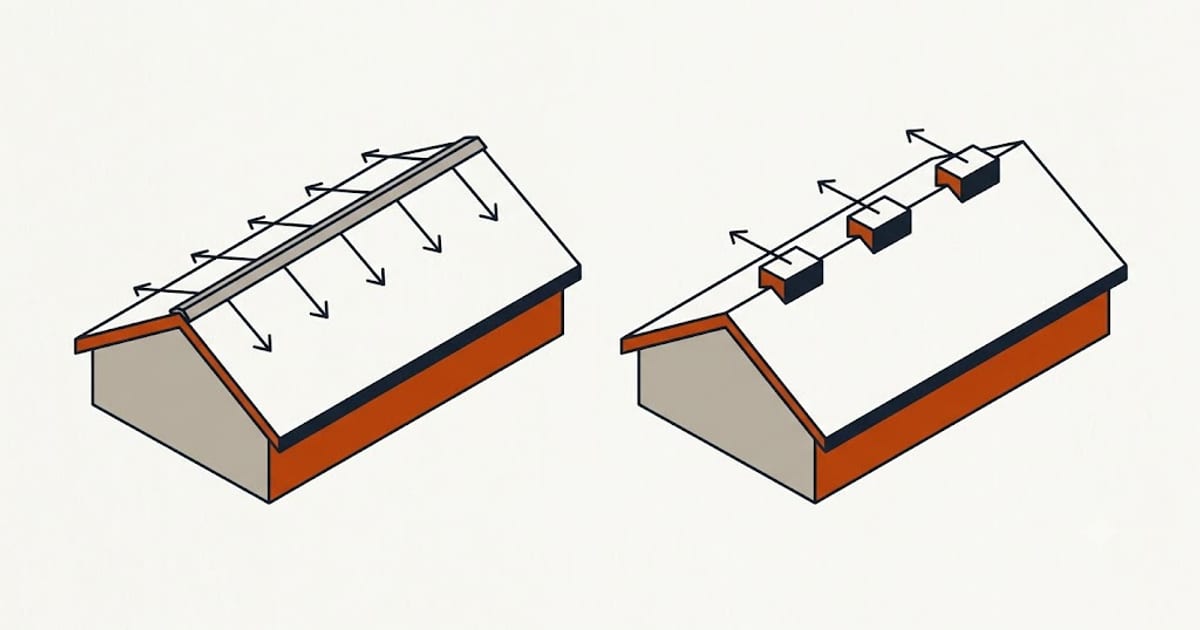 Ridge Vent or Box Vents: Net Free Area per Foot, and Why Mixing Them Backfires
Both work. Only one keeps working when you add the other, and that is the part of the decision nobody mentions at the counter.