An asphalt shingle roof costs $300 to $500 per square installed with three-tab shingles, $380 to $900 with architectural shingles, and $650 to $1,600 with designer shingles. A square is 100 ft² of roof. On a typical 25-square roof, architectural shingles come to about $14,000, with most bids between $9,500 and $22,500.
Below: the price of each grade on a real roof size, how many bundles to expect, which grade costs least per year of service, and the lines that sit outside the per-square price.
Installed prices for 2026, not a quote. Sources are listed at the end.
Price by shingle grade
| Grade | Per ft² of roof | Per square | 25-square roof |
|---|---|---|---|
| Three-tab | $3.00–$5.00 | $300–$500 | $7,500–$12,500 |
| Architectural (laminated) | $3.80–$9.00 | $380–$900 | $9,500–$22,500 |
| Designer (luxury) | $6.50–$16.00 | $650–$1,600 | $16,250–$40,000 |
Fixr's 2026 national figures for asphalt roofs put the average job at $12,000, inside a range of $8,000–$16,000, with architectural shingles at $4–$8 per ft² installed. The architectural range on this page is slightly wider at both ends because it covers steep and cut-up roofs.
"Per ft²" in these prices means square feet of roof, not floor. A 1,800 ft² single-story house usually carries 2,300–2,500 ft² of roof once overhang and pitch are counted; roof replacement cost walks through that conversion.
What each grade is
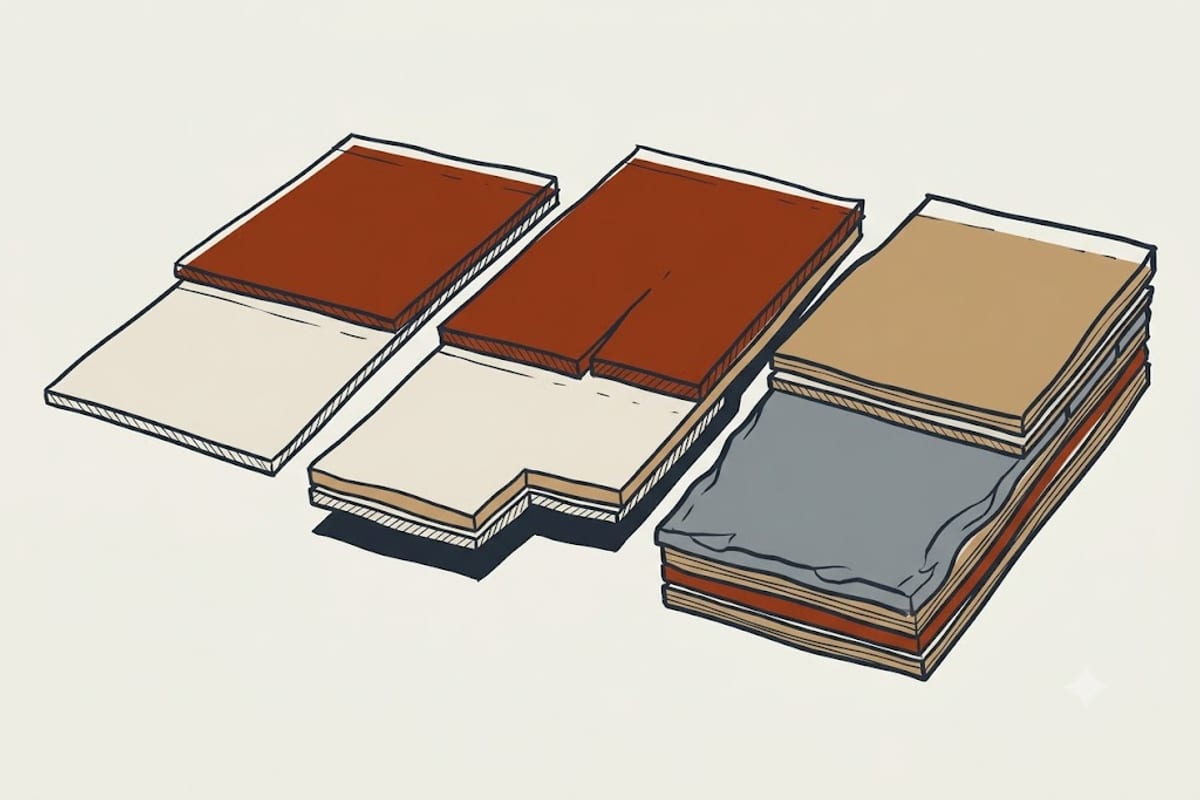
Three-tab is a single flat layer cut into three tabs, so the roof shows a regular grid. It is the lightest and cheapest asphalt shingle, and many suppliers now stock it mainly for repairs on existing three-tab roofs.
Architectural shingles are two layers laminated together. The thicker, irregular edge hides small variations in the deck and gives the roof a textured look. On most US re-roofs this is the standard product, and quotes that do not name a grade are usually pricing it.
Designer shingles stack more layers and are cut to imitate slate or cedar shake. They are heavier, slower to install and carry the widest price range, because the product line matters as much as the labor.
Which grade costs least per year
Divide the typical installed price by a typical service life:
| Grade | Typical per square | Typical life | Cost per square per year |
|---|---|---|---|
| Three-tab | $400 | 15–20 years | $20–$27 |
| Architectural | $560 | 22–30 years | $19–$25 |
Architectural shingles cost 40% more per square and about the same or less per year. Where three-tab still makes sense: a house that will be sold within a few years, a detached garage or shed, or a repair that has to match an existing three-tab roof.
Designer shingles are bought for appearance, not for cost per year. The comparison that matters for them is against real slate or cedar, and against metal roofing for owners planning to stay decades.
Impact-rated (Class 4) architectural shingles cost more than standard ones. In hail regions many insurers discount premiums for them, so the insurer's actual discount, multiplied by the years in the house, belongs in the comparison before choosing.
How many bundles a roof needs
Most architectural shingles come 3 bundles to a square. Heavier designer lines can take 4 or 5, and the bundle count is printed on the wrapper.
Add waste for cutting before converting to bundles:
| Roof shape | Waste | 23.2-square roof | Bundles at 3 per square |
|---|---|---|---|
| Simple gable | 10% | 25.5 squares | 77 |
| Hip | 15% | 26.7 squares | 81 |
Starter strip and ridge cap are sold separately and are not in these counts. The shape-by-shape waste figures are in roof waste factor by roof shape, and the bundle arithmetic for other roofs is in how many bundles of shingles per square.
Lines outside the per-square price
The per-square figures include removing one layer of old shingles. These usually appear as separate lines:
- A second layer to remove: $50–$150 per square. On a 23.2-square roof, $1,160–$3,480. Whether the second layer should come off at all is covered in tear-off vs roofing over.
- Rotten decking: $75–$150 per 4 × 8 sheet, counted only after tear-off. Roof decking replacement cost covers the contract wording.
- Flashing rebuilds at chimneys, walls and skylights, quoted per location.
- Permit, set by the city or county.
Labor makes up 50–60% of an asphalt roof's price. That is why the same shingle costs noticeably more per square in high-wage states; roof replacement cost by state applies Bureau of Labor Statistics roofer wages to every state.
Replacing some shingles instead of the roof
"Cost to replace roof shingles" can mean a whole roof or a handful of damaged ones. Replacing a few blown-off or cracked shingles is a repair, typically $200–$500, and it only makes sense on a roof with years of life left. The tests for that decision, and the cost of other repairs, are in roof repair cost.
Matching is the practical limit on small shingle repairs: colors are discontinued and asphalt fades, so new shingles on an older roof rarely match exactly.
Warranties
Asphalt shingle warranties described as 30-year, 50-year or lifetime cover manufacturing defects, and most are prorated after an initial period. They do not cover installation errors, which cause most early roof failures.
The workmanship warranty from the contractor covers installation. Its length, stated in years on the quote, and the age of the company offering it, say more about how the roof will hold up than the number on the shingle wrapper.
The short version
- Architectural shingles: $380–$900 per square, about $560 typical, $14,000 on 25 squares.
- Three-tab saves about $160 per square up front and costs about the same per year; use it for short ownership, sheds and matching repairs.
- Designer shingles: $650–$1,600 per square, chosen for appearance.
- Bundles: squares × (1 + waste) × 3, rounded up.
- Add a second-layer tear-off, decking, flashing and the permit when a quote lists them separately.
Where these numbers come from
- Per-ft² ranges by grade, the $12,000 average, the $8,000–$16,000 range, the 50–60% labor share and the $50–$150 tear-off: Fixr, asphalt shingle roof cost, updated January 21, 2026.
- Architectural $380–$900 per square, $560 typical: the price basis used across this site, from published 2026 installed pricing of $3.50–$10.00 per ft² of roof.
- Decking and small shingle repairs: SquareDash, roof repair cost, updated April 9, 2026.
- Bundles per square and waste factors: manufacturer bundle coverage and the calculators on this site.
- Service life: typical US ranges for each grade; actual life depends on climate, ventilation and installation.