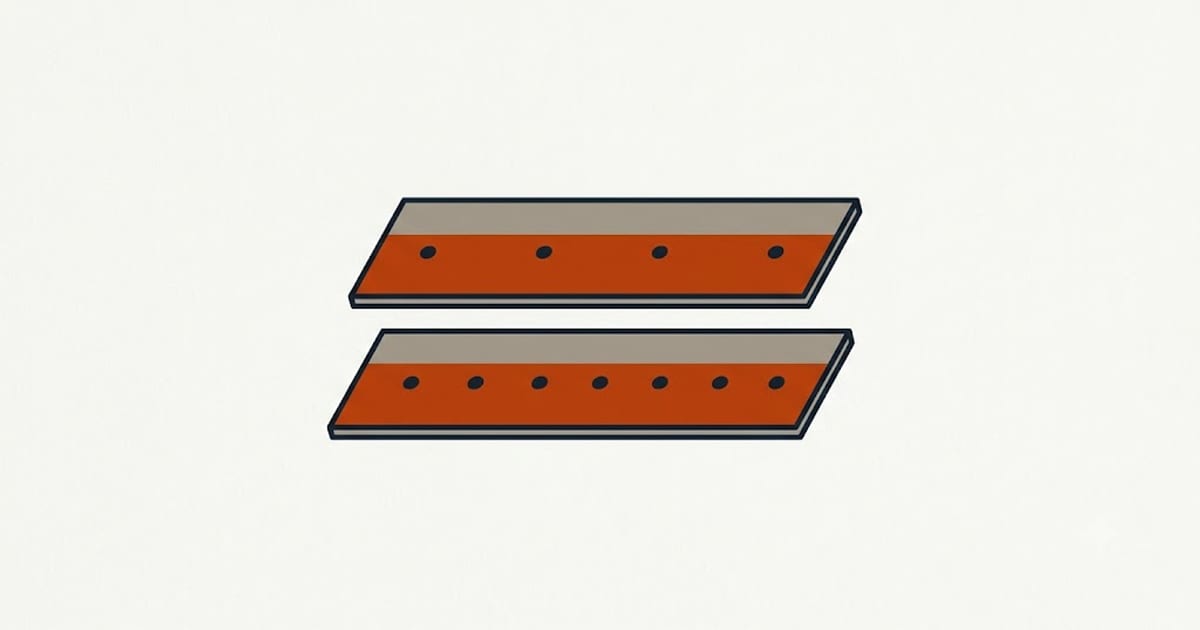
A standard three-tab or architectural shingle is 36 inches wide, and there are about 80 shingles in a square (three bundles of roughly 26–29).
- Four nails each = 320 nails per square
- Six nails each = 480 nails per square
Add roughly 10% for the starter course, ridge cap, and the ones that miss.
Which pattern you need
Six nails, not four, whenever any of these is true:
- The roof is in a high-wind zone — generally 110 mph basic wind speed or above under the IRC, and the manufacturer's instruction will state its own threshold
- The pitch is steeper than 21/12 — nearly vertical roof planes
- The pitch is under 4/12 on some products
- The manufacturer's enhanced wind warranty requires it, which is common and is the most likely reason you will need six
That last one is the one that actually decides it in practice. A shingle rated to 130 mph is usually only rated to 130 mph with six nails. Install four and the product is rated to 60 or 70, and the warranty says so.
What a box holds
| Nail type | Typical box | Nails per box |
|---|---|---|
| 1¼″ galvanised roofing nail | 5 lb | ~1,150 |
| 1¼″ galvanised roofing nail | 50 lb | ~11,500 |
| Coil nails (pneumatic) | 7,200 per carton | 7,200 |
A 20-square roof at six nails per shingle needs about 10,600 nails, plus 10% — call it 11,700. That is one 50 lb box, or two cartons of coil nails.
Buy coil nails by the carton if the crew is using guns, which they will be. Loose nails are for hand-nailing repairs.
Nail length
Long enough to penetrate the deck by ¾ inch, or fully through if the deck is thinner than that.
- ½″ or ⅝″ plywood/OSB deck, one layer of shingles: 1¼″
- Second layer over existing shingles: 1½″ or 1¾″
- Board decking: 1½″
Too short and the nail holds in the shingle but not in the deck. Too long and it comes through the underside of the sheathing, which is visible from the attic and does nothing else harmful — the short direction is the one that fails.
Placement is more important than count
Nails go in the nailing strip, the reinforced band across the shingle, and the strip is marked. Above it, the nail misses the shingle below and the course is held by nothing at its lower edge. Below it, the nail is exposed to weather.
Overdriven nails cut through the mat. Underdriven nails hold the course above off the deck and telegraph through. The gun pressure that is right for the first bundle of the morning is often wrong by afternoon as the shingles warm and soften.
This is the single most common installation failure, and it is invisible once the next course is on.
Starter, ridge and hip use different counts
Starter strip takes four nails per piece along the eave and rake. Hip and ridge cap takes two nails per cap, both covered by the next cap.
Neither is included in the field count above, and both are separate products with their own coverage — as is the bundle count for the field shingles themselves.
Galvanised, and nothing else
Roofing nails must be hot-dipped galvanised, stainless or aluminum. Electro-galvanised nails rust through in a decade and the shingles come off in sheets with the nail heads still in the deck.
It is a small price difference on a line that is already small — a 20-square roof is around $60–$120 of nails against several thousand dollars of everything else.