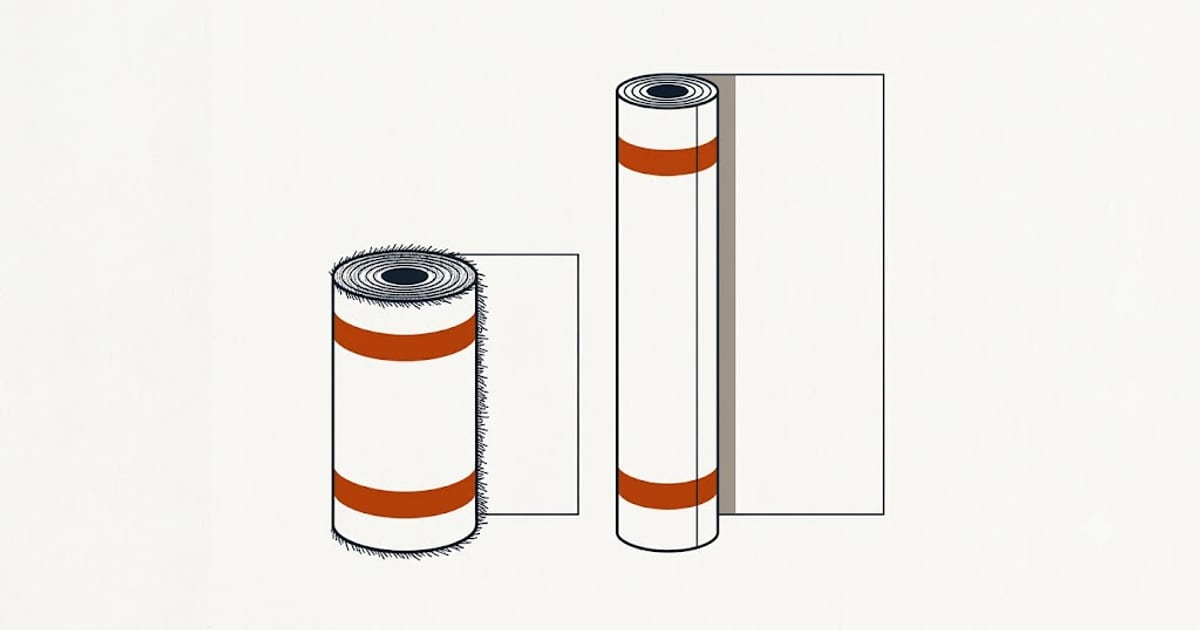
Underlayment is the layer between the deck and the shingle. It is a secondary water barrier, a dry-in for the period between tear-off and shingle, and — on a windy day — the thing that decides whether the crew can work at all.
Two products do this job and they are not close relatives.
Coverage is the number that decides the cost
This is where the price comparison inverts, and it is worth doing carefully.
#15 felt comes in a 4-square roll: 36 in wide by 144 ft. After a 2 in head lap and a 4 in side lap, actual coverage is about 3.6 squares.
#30 felt comes in a 2-square roll: 36 in wide by 72 ft. Same laps, actual coverage about 1.8 squares.
Synthetic typically comes in a 10-square roll: 48 in wide by 250 ft. Laps are printed on the sheet, usually 4 in head and 6 in side, giving about 8.9 squares of actual coverage.
| Product | Roll | Nominal | After laps | Rolls for 30 squares |
|---|---|---|---|---|
| #15 felt | 4 sq | 4.0 | 3.6 | 9 |
| #30 felt | 2 sq | 2.0 | 1.8 | 17 |
| Synthetic | 10 sq | 10.0 | 8.9 | 4 |
Cost per square, installed
Material is only half of it.
| Product | Material / square | Labour / square | Total |
|---|---|---|---|
| #15 felt | $6–9 | $18–25 | $24–34 |
| #30 felt | $11–16 | $18–25 | $29–41 |
| Synthetic | $16–24 | $10–15 | $26–39 |
Synthetic material costs roughly twice #15 felt and lands within a few dollars per square once labour is counted, because a 10-square roll is four handling operations instead of nine, it does not tear when a boot catches it, and one person can carry a roll up a ladder.
On a 30-square roof, that is a difference of a hundred dollars or so either way — small enough that the decision should be made on behaviour rather than on price.
Where the products genuinely differ
Water absorption. Felt is asphalt-saturated paper. It takes on moisture, swells, and wrinkles — and those wrinkles telegraph through the finished shingle on the first hot day as visible ripples across the field. Synthetic is polypropylene and absorbs nothing.
Tear strength. A staple or a nail through felt in wind will tear out and the sheet will unzip along the row. Synthetic will not, which is the reason crews adopted it long before homeowners had heard of it.
Walkability. Damp felt on a slope is genuinely dangerous. Synthetic is textured for grip and stays that way wet.
UV exposure. Felt is rated for a few days exposed; it dries out, curls, and cracks. Synthetics are rated for 90 to 180 days depending on the product, which matters on any job that gets dried in and finished later.
Weight. A 4-square roll of #15 is about 30 lb. A 10-square roll of synthetic is about 35 lb. That is 2.5 times the coverage for the same carry.
Where felt still wins
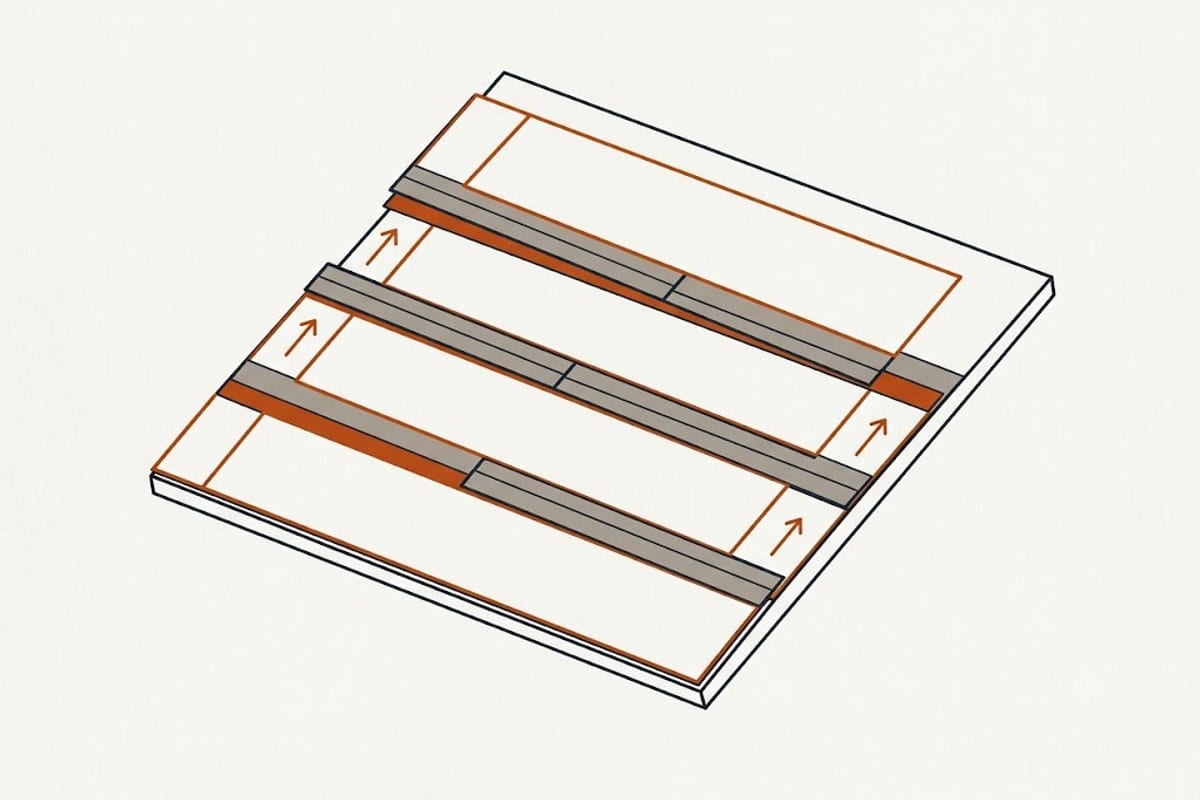
Low-slope roofs where the double-layer method is specified. Below 4/12, most manufacturers require a two-ply felt application with 19 in laps. That method is written around felt, and some warranty language still names it.
Very small jobs. A shed, a porch, a single dormer. Buying a 10-square roll for 3 squares of roof is wasteful, and felt sells in small rolls.
Historic work with a specification that names it. Rare, but it exists.
Budget jobs where the roof is dried in and shingled the same day. With no exposure period, felt's weaknesses barely surface.
What neither one is
Neither is ice barrier. That is a self-adhering membrane that seals around fasteners, it is required at the eaves in cold climates, and it is a separate product with its own coverage rules.
Nor does either substitute for correct flashing. Underlayment is the second line of defence, and a roof relying on it as the first has already failed somewhere else.
Ordering
Work from roof area including waste, then convert with the coverage-after-laps figure rather than the number on the wrapper. Run the area first, then add one roll — the offcut at the end of each course is not reusable on the next slope, and coming up half a roll short on a Friday afternoon costs more than the roll does.